Out of Character (OOC):
Chronicle: Mage 2: The Dethroned Queen
Venue: Mage: The Awakening 2nd Edition
Chronicle Storyteller: Jerad Sayler
Assistant Storytellers: Hannah Nyland & Alex Van Belkum
Legacy Conversion: The Austere
A Left-Handed Legacy born from the Guardians of the Veil and provides crossover with God-Machine systems.
The following is a conversion by Jerad Sayler from the original Legacy: The Fangs of Mara to a version for use in Mage: The Awakening Second Edition for a player's new mage Character Felix. The intent was to link Clockwork Mages to the God-Machine at last. We are very excited about the prospects. Changes from original materials in Red, god voice in orange.
Sources:
- New Legacy system from Mage: The Awakening 2nd Edition corebook
- Original Legacy as seen in Guardians of the Veil sourcebook (MtA1.0)
- Base conversion from Legacies: The Rehashed (MtA2.0 fan-made conversions here)
- God-Machine Chronicle from The Chronicles of Darkness corebook
- Attainment mechanics developed using Demon: The Descent corebook

“Flesh is weak. Compassion is nothing. Only the Movement is Eternal."
History:
The Guardians of the Veil sacrifice their own moral status so that other mages are free to cultivate Wisdom. It’s a difficult way to live, balancing the positive virtues that the order expects all mages to pursue against the immoral actions required for the greater good. Guardians must always be mindful of the line between necessary evil and self-serving cruelty. The legacy of the Austere crossed that line long ago. Theirs is a creed that eschews compassion and self-sacrifice , whose members seek to replace morality with machine-like detachment even as they modify their own bodies with mechanical constructs.
The first of these Clockwork Mages, an agent of the Dragon’s Eye who became known to his followers as the Prime Mover, developed a metaphysics that envisioned the Tapestry of Creation and the Diamond Wheel as an immense and intricate clockwork mechanism. In his view, the Abyss was a misalignment of key elements in this Eternal Movement (aka the Great Movement). To restore the smooth functioning of the Mechanism of Creation, he concluded, mages must become Austere: pitiless, free of sentiment, even machine-like in their outlook. They must reject all trappings of mercy and compassion, which obscure one’s ability to perceive and correct the flaws that prevent the smooth functioning of reality.
Further contemplation — or derangement — convinced the Prime Mover that simply attempting a detached, mechanistic view of Creation was not enough. He and his inheritors would need to become machines in fact as well as in outlook. By replacing their body parts with superior mechanical analogs, the Austere would advance their detachment from their own humanity and increase their sympathetic connection to the Eternal Movement. While the Guardians nipped at the edges of the Abyss with their subtle and ineffective schemes, the Austere would seize control of it by spilling blood without hesitation or remorse. Mages careless about Paradoxes would be eliminated; Sleepers who glimpsed hidden truths would be sacrificed. Murder, torture, terrorism and other immoral actions would be used s tools to shift the Eternal Movement into its proper configuration.
The Subversion of the Diamond Wheel:
Somewhere along the way, the Diamond Wheel that they served shifted to something else. The Eternal Movement called for balance, safety and the status quo. Magic could do harm to the Fallen World and the Fallen World and the Abyss could certainly harm Magic. The Eternal Movement that they believe essentially the same cycle of souls as the Diamond Wheel is not, in fact, the Diamond Wheel. When the Prime Mover entered the trance reached out to connect with the Diamond Wheel, what he actually touched was a perversion of that cycle, a Machine that grinds lives for occult output and its critical projects across the Tellurian. It too was cold and emotionless. It too did what it felt was necessary without remorse or hesitation. It was what the Prime Mover was looking for.
The God-Machine network used by Angels and Infrastructure to pass information (and derogatorily referred to by Demons as Angel Radio") instructs the Clocker how to construct the Mainspring in their entranced state, a sort of Infrastructure Lynchpin built into the mage's body. With the insertion of the Mainspring, a Clockworker places a permanent connection to the God-Machine and shapes his soul around that cog. Something like a Mage-Stigmatic is the result. But the Austere are so much more than that.
Their Order never fully knew the truth, still don't in fact. But when they discovered how the Legacy's doctrine shifted from being cruel because of its necessity to being cruel for its own sake, it was labeled Nephrandi. Most were "dealt with" in private, others went into hiding. Still other keep their Legacy a secret from the Order or are permitted by certain caucuses to continue to serve. These were deemed by the authorizes in their respective conciliums "not to demonstrate the aberrant behaviors incompatible with the Order's tenets." This is an extremely dangerous approach and one not sanctioned by the order itself. Since the Austere are so eager to destroy and disrupt Guardian operations where ever they can, leaving a potential double agent in the organization would be frowned up by most. Still some remain, hidden in tight circles, especially where they and other Nephrandi Guardians can cover each other's backs.
Appearance:

Superficially, a Clockworker can look like anyone. His mechanical implants and enhancements are designed to mimic the appearance of actual flesh (at least when inactive). However, certain commonalities do tend to crop up. Scars from when they acquired their Attainments are not always easily concealed; a Clocker hoping to keep his affiliation secret will be careful to create a plausible excuse for his disfigurements. Also, many Clockers favor tattoos, body piercing and other mundane physical modifications — either because a penchant for such things attracted them to the Legacy, or because such activities express their willingness to modify their bodies.
Background:
Any mage proficient in the Matter and Life Arcana can find a place among the Austere, though there are few healthy reasons for wanting to do so. Some who seek the Legacy have pre-existing obsessions with body modification and/or machinery. Others are physically or emotionally damaged and see the Legacy as a way to replace what they’ve lost. Some desire to shed their humanity in order to indulge in secret vices and compulsions. Tutors have their own reasons for seeking pupils. Some wish to pass the ideology of the Prime Mover to a new generation of mages. Others merely desire a source of cheap labor.
Organization:
The first generation of the Austere cooperated closely as followers of a greater cause, but today many Clockwork Mages now operate solo, following a personal agenda that includes acts of wanton cruelty and violence intended to test or reinforce their lack of humanity. Some Clockworkers do seek to improve the functioning of the Great Movement, based on their particular understanding of it. Among these Austere, observing, disrupting and damaging the operations of the Guardians is a primary goal
(since they are not willing to do what is necessary and the Order tried to wipe them out). One favored tactic is to infiltrate the ranks of the Labyrinth and steer the Sleepers toward the Austere’s agenda. Clockworkers who are skilled at disguising their mechanical nature (or eliminating those who become suspicious) have been known to infiltrate the order itself.
Officially they are banned by the Diamond but many are Apostates in the fringes of mage society. There they serve their enigmatic and alien master with complicity.
The Eternal Movement continues as time passes. Only the highest leadership in the fragmented Legacy or those who stumble across their associations by accident know that the Eternal Movement is the God-Machine and its servants. Which side the Legacy members land on that Eternal Conflict between Angels and Demons is dependent on them.
Doctrine:
Parentage: Former or current Guardian of the Veil, Founded by Mastigos but Moros can also be initiated.
Prerequisites: Matter 2, Life 2, Crafts 2, Gnosis 2,
Nicknames: Clockworkers, Clockwork Mages, Clockers (w/i group, vulgar), Cyborgs, Steampunk Cyborgs, Cybermen (demon derogatory), Cybomen,
Concepts: Creepy antique dealer, eccentric tattoo or piercing artist, wandering handyman, maverick surgeon, maimed car accident survivor, traumatized war veteran, heartless assassin.
Initiation:
Construct and implant, with the assistance of your
tutor, your Mainspring, enter into a trance-like state, and implant it into
your chest or abdominal cavity while shaping your Soul around it. See First Attainment on the creation and Installation of the Mainspring.
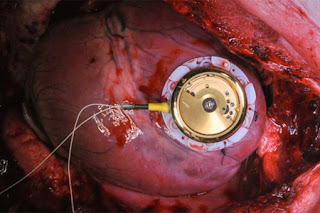
The Austere, who once served the Diamond Wheel, which they now call the Eternal Movement became Left-Handed when there obsession with cold cruelty and calculation aligned them with the desires of the God-Machine and its angels. Some Clockers know this, some do not realize it. The Tutor assists the student in tapping into a subliminal form of the God-Machine’s network which is used to communicate with angels and Stigmatics. The implanted Mainspring is actually small Lynchpin of the God-Machine and combination Soul Stone, without the benefits or drawbacks or being a Soulstone. The implantation is a Wisdom Sin for all but the Falling level.
Are the Austere firmly loyal to the God-Machine? Not at all. Most of the Legacy does serve in their own way, even if they don't know the identity of the Eternal Movment they serve. They have to use Demon technology (because of its physicality) and Aetheric energy instead of the direct occult energies of the God-Machine. This means rather than interfacing with Angels directly they have to cannibalize Demons for parts as a result of this disconnect. They may serve themselves as rogue agents or side with an Agenda. Infrastructure and Angels sometimes reacts positively to Austere, sometimes they attack as surely as any other threat.
Another Spring:
If the Stigmatic chooses they can choose to make Soul Stones in the future which are implanted in the body at a later time. These Soulstones may also be Imbued and may even be Gadgets or enhancements. This is in keeping with the Legacy but prevents them from making Demenses.
Magic:
Ruling Arcanum: Matter
Secondary Arcana: Life, Mind
Yantras:
Succeed on an Academics check relevant to the spell (+2), acting ‘logically’ (+1), investigating the functionality of the target (requiring either disassembly and reassembly, or vivisection) (+2), putting aside distractions and focusing on the matter at hand (+1, +2 if this removes a Positive Condition). Demon or God-Machine items work well here too.
Oblations:
Observing the function of a large, mechanical structure such as a Ferris wheel, watching the movement of the stars and planets in the night sky, disassembling and reassembling (without using magic) an object with complex moving parts (such as a pocket watch), committing an act of minor but dispassionate cruelty against a stranger, receiving a permanent or semi-permanent body modification (such as tattooing, piercing or scarification), performing the former on another according to that person’s specifications, vivisecting a living creature. Studying and reverse engineering pieces of inactive Infrastructure, Demon bodies or Gadgets.
Regular magic performed by the Austere revolve around transhumanistic biotechnology, designing and inventing specialized equipment/items and infusing cross-compatibilities of Life and Matter into their own bodies and the devices they use.
Attainments:
Clockworker Attainments require that the mage achieve a degree of dissociation from conventional morality and her own humanity in order to internalize the precepts that make the Attainments possible.
1. First Attainment:
"Mainspring Attunement"
Pre-Requisite:
Matter 2, Life 1, Gnosis 2, Craft 1, and Initiation.
With this Attainment, the mage creates a small device (usually less than Size 1) that represents his personal understanding of the Eternal Movement. Designing and constructing the device requires one week of uninterrupted work. Once the Mainspring is created, the mage enters a trance-like state in which the device magically implants itself somewhere in his chest or abdominal cavity, where it will establish a connection to his nervous system.
Occluded Mainspring: Initiation Implantation and attunement to a Mainspring is the first and only
step in becoming Austere. In addition, the Mainspring’s integration into the body of the Mage grants additional benefits. Firstly, the Mainspring itself is invisible to magical detection, requiring Focused Mage Sight (FMS) and contests this detection with a Clash of Wills, using the higher of the Mage’s Life or Matter, this is counted as having an Indefinite duration. To God-Machine beings and other Aetheric phenomena also require a Clash of Wills to detect the mage’s Lynchpin. If successful the mage registers as a Stigmatic with a piece of Infrastructure in them. Implants also register as analogous to Gadgets or Demon parts.
Aetheric Detection: The Mainspring may or may not be of Angelic design, but it remains inexorably tied to the God-Machine’s nature. So too do the Austere. The methods of magical occlusion the God-Machine uses to mask its works from mortal eyes do not function against the Unchained. Of course, the God-Machine has devised solutions to this threat. In addition to magical occlusion, most facilities are stored away from high-traffic areas or disguised through mundane means. As an Instant Action, the
Austere can detect (outside of sensory range) and/or
perceive (within sensory range) the presence and location of God-Machine Angels and Demons,
including those in Twilight, but is not able to discriminate between the
two. Clockers can also detect Stigmatics, Cryptids
and God-Machine Infrastructure. If the beings have any concealment powers active the
detection provokes a Clash of Wills using the highest of Matter or Life dots. The mage can also detect Aetheric Resonance just like a Demon or Angel. Initially, the Austere can only detect
such phenomenon within a small room, however at Life or
Matter 4 this extends to a large room.
Design: Replicates
Detect Life/Matter, Reach into Instant Casting, secondary factors into scale,
primary into mostly-irrelevant duration set to a Scene for simplicity.
Optional Effect: "Machinations"
Requirements: Mind 1
People
do not necessarily wear their flaws openly, but such failings are easily read
by a member of the Austere. As an Instant Action, the Mage can determine Rank,
Virtue, Vice, Incarnation, or Primum of an observed subject. Additional study can slowly reveal all the
information. This optional Attainment
only works as Sensory but only within the same area covered by the Mainspring
Attainment.
Design: Reach into Instant Casting, and perhaps (unaccounted)
Sensory Range. Adding a different
restriction to balance.
2. Second Attainment:
"Motor Activation"
Pre-Requisite: Matter 2, Life
2, Gnosis 2, Craft 2,
Body Control: The implantation of the
Mainspring into the Austere’s body is only the first step, with additional
training, the Mage can draw directly upon its power to charge their own bodies.
With an Instant Action, the Austere can draw upon the Mainspring to control the
actions on their body for a scene. This replicates the effects of the Body
Control spell with Potency equal to the Mage’s dots in Life.
Each level of Potency gives one
rank in each of the following:
- Breathing:
Each rank slows down the subject’s breathing, halving the amount of oxygen she
needs to function normally.
- Heartbeat:
By slowing down the subject’s heartbeat, she can double the interval at which a
toxin affects her.
- Metabolism:
Regulating the subject’s metabolism allows her to subsist on half as much food,
and doubles the amount of time between checks for deprivation or fatigue.
- Reflexes:
Add +1 to the subject’s Initiative.
- Scent: The
mage can change the subject’s scent to any that her body could naturally
produce, eliminating (or increasing) body odors, controlling pheromone release.
- Fast Healing:
Each level of Potency also halves the healing time of bashing wounds by
controlling internal bleeding, preventing bruises or helping them to heal
quickly.
Design: Reach
2: Advanced Duration, Instant action. It’s pretty much 2-3 abilities in one,
however the first element only works for a scene, and must be continually
re-activated which can eat into action economy. So assume most Austere don’t
re-activate it every scene, and shame ones who do. Second ability is mostly
just to hide that they are Austere, and also to add in a little
invisibility-from-cameras ability.
Optional Effect: "Hidden Agenda"
Requirements: Mind 2
Invisible to Technology: If the
Mage is versed in the Principles of Mind, he may also use the Mainspring to shift
the perception of technological witnesses away from himself. As an Instant Action, and by
spending a point of Mana, the Austere may render himself “invisible” to the
perceptions of others as viewed through digital technology, as per the spell “Incognito Presence” for a single
Scene. This provokes a Clash of Wills in any Magical attempt to detect them
through this same technology.
Limited Incognito Presence: While this secondary Attainment is active the mage can apply his understanding of part-whole interactions to a social context, enabling him to pass himself off as an anonymous member of any large organization or group. This effect only operates within the target group’s own territory — the hallways of a corporate office building or police station, for example — or among an assembly of the group’s members, such as a union hall meeting or cult ritual. When the power is active, those who witness the mage will assume he’s one of the group and will barely notice him (as per the spell “Incognito Presence”).
Social Context: Should the mage choose to speak or interact with any group members he is hidden within, he automatically gains two steps to his Impression level for Social maneuvering.
Design: Incognito Presence, Reach for Instant Action and
Advanced Duration. But only works on self, no secondary factors to help others. Additional/combined effects but with major limitations.
3. Third Attainment: "Cogs of the Machine"
Pre-Requisite:
Life 3, Matter 3, Gnosis 4, Crafts 3,
 Device Integration:
 Studying the intricacies of the Great Movement grants the mage insight into the way that parts reflect the whole. He gains mechanical insight into how to integrate technology and biology together. As the Austere advance, they learn how to integrate mechanical devices into their own body, becoming closer to the Eternal Movement. They can transfer qualities from a mechanical device to herself, mimicking the device with her flesh. For instance, they could borrow a screwdriver’s Phillips head and turning capability and transfer it to her index finger, so that they can unscrew things with her hand.
As an Instant Action
and at a touch, the
Mage may integrate a number of traits from a mechanical device into their body,
similar to the spell “Wondrous Mechanism.”
Traits/capabilities
integrated from the device cannot exceed their dots in Matter.
Doing so uses parts from the actual item. The effect is Lasting but the number of pieces of equipment that can be simultaneously
integrated is equal to their dots in Life.
Each piece of equipment may grant one or more traits each (based on
Matter dots). These
features or devices are fully integrated and the Mage
will suffer no harm from these item’s operation for the duration of the
implantation, for example implanting a heater into the Mage’s body will not
cause burning
of the body.
Supernatural Item Integration:
If integrated with an extended action, Gadgets (Embedded and Exploited) and Magical Items (Imbued, Enchanted, and
Enhanced items but not Artifacts) can also be integrated, each trait can
include the supernatural effects of the item.
If an effect is contingent or passive that effect remains so and must be
activated in a similar way. Such devices
can be fueled by the Mage’s Mana pool instead of Aether or their own storage of
Mana.
Using Gadgets: Adapt rules for Embedding Gadgets from Demon: The Descent in order to implement this. Or keep it simple. Exploited Gadgets are Embedded the same way but installation can cause Glitches just like a Demon would deal with.
Removing and adding such specialized items requires an extended action of Intelligence + Crafts + Gnosis with target successes equal to the structure of the device being removed or added. Each roll requires 15 minutes in a quiet workspace and appropriate tools (or this roll is penalized). Exploited Gadgets require double the successes and one hour per roll. Failure on any roll to install a Gadget causes a Transient Glitch. Dramatic failure at any time causes a Permanent Glitch. The Glitches can be removed if the Gadget is removed but even reconstructed the Glitch will return any time a Clocker installs it using this attainment.
During the procedure, a gadget radiates enough Aether to trigger the aetheric resonance of any other Demons in the area. Installation comes with concomitant visual effects — arc lightning, localized thunder, and power outages. If the mage performs too many Installations in the same place or in a short period of time, the God-Machine’s agents will likely investigate sooner rather than later.
Triggers for devices are integrated into the body, simplified interfaces with additional mechanical components. Activation of these items still require whatever time interval the original item had and only last as long as originally designed. Items integrated into the body are
effectively destroyed once integrated and removed. Per Storyteller discretion these items may be
carefully reconstructed but usually supernatural items do not survive
transplantation.
Design: Wondrous
Machine, Reach into Instant Casting, and two Reach for Lasting Duration.
Secondary factors are removed, and the Attainment can only be used on the Mage
themselves.
Sum of its Parts:
Use of the Cogs of the Machine Attainment with a Clockworker’s mechanical parts is always limited by the Size of the added device. The mage couldn’t graft a full-size refrigerator to his hand as a way to keep food supplies cold, for example (though he might be able to transplant some of the fridge’s parts to give the hand cold producing properties).
Optional Effect: "Suppress Sentiment"
Requirements: Mind 3, Merit: Emotional Detachment
Condition Suppression: The Austere
seek to purify themselves of the disgusting pity, sentiment and other mental
flaws which prevent Mages from truly comprehending the Eternal Movement. Application of the principles of the Mind Arcanum are thus much cherished in
purging these hated failings from the Mage’s mind. As an Instant Action, the
Mage can suppress one mental condition or tilt per dot of Mind for the
remainder of the scene. Supernatural mental Tilts/Conditions require a Clash of Wills.
Design: Clear Thoughts, One Reach for Instant, one for Advanced
Duration, One to allow it to work on Paradox and Supernatural Mind Conditions
without a Clash of Wills. No secondary factors, only on self.
4. Fourth Attainment:
"Install Implants"
Pre-Requisite: Life 4, Matter
4, Gnosis 6, & Crafts 4,
and a single Wisdom check at Falling level when first learned.
Construction of Enhancements: With this Attainment, the
Austere learns how to implant advanced,
customized technological devices and body modifications permanently into his own body, replacing his failing,
weak flesh with the rigid certainty of inert matter and the biomechanics of Demons and Angels. The Mage must fully construct new devices before
they are implanted, and may seek assistance in this matter from trusted allies. The exact method by which they are
constructed is modeled after the Gadget design, creation and Installation
process from the Demon: The Descent corebook.
With this Attainment, the Austere can replace or modify part of his body. A body part that’s replaced cannot be restored, so if the device breaks the mage suffers the consequences of living without the original (though the Attainment allows the inert device to remain in place without triggering an immune response). Should the mage’s Mainspring ever be destroyed or removed, his artificial body parts become partly inert, performing only mundane functions.
Additionally, as
opposed to constructing something new, the Clockworker and reverse engineer
Demon Form powers/equipment and integrate these parts into their body. This also follows the same process above to
make them ready and compatible for the mage’s pattern. Having this ability also
allows them to jack into Demons, Angels and Infrastructure and convert their
Aether and Essence into Mana.
Once the item is ready,
a scene-long ritual of implantation is performed by the Mage, at the end of
which his fleshy organ has been replaced by his construct part. The parts of the body that can be
replaced this way defy science but are
limited in number to the highest of Life and Mind dots. Swapping
out a single part with another takes one Scene. Taking the Enhancement out again would require a replacement part or a
donor fleshy limb. Each specific construct becomes a part of the Mage’s body,
and has abilities based on its construction, which should additionally be
determined by the player and the ST.
Design: Life 4, Matter 4 spell to graft inanimate objects into a subject’s body. Primary Factor is duration made Lasting with 2 Reach, secondary factor is mostly irrelevant, as the effects are not really based on Potency.
Some examples include but are not limited to the following:
Before performing the Attainment, a Clockworker must design the desired device. This is an extended action with the target number depending on the body part mimicked (eight successes for a limb, 10 for an internal organ, 12 or more for a sensory organ). The mage rolls Intelligence + Science, with each roll representing a half-day of research and experiment. Once the design is complete, constructing the devise is another extended action, with each roll representing one day of uninterrupted work and meditation. The mage rolls either Intelligence or Dexterity + an appropriate skill (typically Academics, Crafts, Medicine, Occult or Science), with bonuses or
penalties dependent on the equipment mage has available. If the mage is assisted during the design or construction process by another Clockworker — usually a tutor or pupil — apply the Teamwork rules from the World of Darkness rulebook, p. 134. (The mage receiving the device must be the primary actor.) The number of successes required for construction is the same as that for design.
For construction, failure to acquire enough success in a number of rolls equal to the mage’s Attribute + Skill indicates that the device fails and must be discarded. A dramatic failure indicates that the device seems to function, but once implanted will fail, becoming completely inert. The character will only discover this after undergoing the full, painful implantation process.
Once the device is constructed, this Attainment allows her to enter a trance state during which the object is activated and then implants or attaches itself to the mage’s body. This bloody and painful process takes one hour, after which the Clocker Mage must rest for at least 24 hours. A constructed device need not be implanted immediately. Below are some possibilities; Storytellers are encouraged to create their own variations. Each mage can choose only one of these options. Should a mechanism be destroyed or damaged beyond repair, the mage can replace it with a similar device, but he must again undertake the full design and construction process.
Independent Hand: A mechanical hand which may detach itself and move on pre-assigned tasks, or be reflexively directed by the Mage, relying on its sensory information. The mage’s hand can detach itself and function somewhat autonomously, with Durability 3, Structure 4 and Speed 3 (by crawling or climbing). The mage can send the limb on a pre-assigned task — “Crawl over there and bring back that key” — or he can reflexively direct it mentally by sight or touch (the mage can feel through the hand as if it was still attached). If he is controlling the hand directly, the mage must take an instant action for the hand to perform a task. In addition, the mage can use his Third Attainment to temporarily add additional functions to the hand, either while attached or while it’s separated.
Independent Eye: Instead of his hand, the mage replaces his eye. The mage’s eye and optic nerve can detach from his skull, and extend small legs allowing it to scuttle about (with the same traits as the hand, above). The mage can see whatever the eye sees. If the mage possesses Space 2, he can reflexively direct the eye’s movements regardless of distance; otherwise, if the eye leaves sensory range, he must concentrate to maintain contact with the eye (and he has to regain contact if his concentration is ever broken).
Prehensile Eyes: The mage’s eyes can extend from their sockets on articulated stalks up to four feet long. This allows the mage to see into a small space, around corners or anywhere else the eye can fit. The mage can enhance the eyes’ vision with appropriate sensory spells. If she chooses to extend both eyes at once, she effectively has Omnivision with the benefits of the "Innward and Outward Eye" spell.
Implanted Weapon: Weapons hidden within the Mage’s own body which can be extended or hidden with an Reflexive Action.
Circulator Upgrade: The mage’s circulatory system has been altered, so that when this enhancement is activated, her blood is infused with a sticky, viscous oil. This fluid causes any tears in the mage’s skin to seal themselves, stopping blood loss. For each point of Mana the mage expends, she may heal one lethal wound or two bashing wounds. Note that this doesn’t repair damage to the Austere’s mechanical body parts. This can be used to restore function to biological parts suffering Tilts.
Vascular Sealant: The mage’s circulatory system has been altered, so that when this enhancement is activated, her blood is infused with a sticky, viscous oil. This fluid can patch damage to the Clocker's machine parts. For each point of Mana the mage expends, she may convert a point of Lethal Damage to Bashing or heal two Bashing Damage. This can restore function to mechanical parts suffering Tilts.
Secondary Body: The mage creates a tiny automaton that is stored in his chest cavity. Once released, the device unfolds itself into a human-like form that stands one-fifth the size of the mage. While the mage enters a trance state and concentrates, he can project his awareness into the puppet, operating it and perceiving through it as if it were his own body. The device has the same Physical and Mental Attributes as the mage, including Health and Defense (except that the device’s Size is 1), and uses the mage’s Mental Attributes when active. The mage cannot cast spells while he is operating the small body, but any spell that he casts upon himself before activating the device will affect the automaton as well. As the device has no mind of its own, it can only operate under the mage’s direction. If the automaton moves out of sensory range, the mage must concentrate to maintain contact with it unless he has Space 2 or greater (in which case maintaining control is a reflexive action). If the automaton is destroyed or contact is broken, the mage’s consciousness returns to his body without harm.
Any Demon Form power can be emulated or stolen to provide more options.
Such implanted enhancements can
be further enhanced with Cog in the Machine but count against the total number of devices altered in such a way
(limited by Life dots).
The Body Eclectic
A Clockworker’s mechanical
enhancements have the following properties:
1.
Anachronistic
design: The Austere are not cyborgs. Their mechanisms are not high
technology, but exquisitely complex mechanical parts designed along God-Machine-based
engineering principles that blur the line between science and magic. As their
name implies, the Clockwork Mages favor a baroque assemblage of gears, cogs,
wheels, pins, springs, shafts, wires, jewels and similar moving pieces.
2.
Mundane appearance: Except when performing an obviously unnatural action, a Clocker’s
artificial body part is indistinguishable from the real thing. The artificial
part’s magical nature prevents it from triggering metal detectors. Viewed by
x-ray or other imaging devices, the implants appear as featureless blurs that
could be ascribed to scanning errors (which may raise suspicions, depending on
the circumstance). Enhancements that have no human analog will, of course,
never be mistaken for natural. If an enhancement is damaged, its organic façade
is revealed for what it is: a thin skin covering a host of mechanisms within.
3.
Mundane
function: As long as the parts are functional, artificial parts are able to
perform the mundane functions of the part they replace. An artificial hand is
as sensitive and dexterous as the original; an artificial eye sees at least as
well as the real thing. This is true even if the original was lost long before
its replacement was added. A part that’s been damaged won’t heal, but may be
repaired magically or by mundane means. A damaged part may or may not maintain
its mundane function, depending on the circumstances.
Optional Effect: "Deference Engine"
Requirements: Mind 4, Merit: Tolerance for Biology
The Clockwork Mage can use the Mainspring to subtly reinforce her brain and nervous system. This improves cognitive abilities and perceptions, enabling them function normally while performing morally dubious acts. This attainment re-orders the brain to that of an ordered thinking machine running on wetware.
Total Immorality: The
Clockworker is now completely free from the normal bounds of morality. While they can still suffer Wisdom Sins in the normal way, they are no longer disturbed or prone to suffering Breaking points from witnessing or committing any level of horrible atrocities or insanity. The mage is immune to Madness, Fugue, Broken, Guilty, Spooked, Shaken and a host of other conditions that deal with sanity and the condition of someone's mind.
Total Detachment: If the Austere is sufficiently trained in the Mind Arcanum, their attunement to the Eternal Movement through their Mainspring can be completely separate their minds from the bounds of emotional and irrational impulses. They are completely immune to mental Conditions based on non-supernatural emotional control or manipulation. All Supernatural means of mental influence forces a Clash of Wills. If the supernatural means targets emotions specifically it automatically fails.
Cross-Compatibility: Additionally, the mage is now able to use his mind's processing schema and Major Installation parts to interface directly with God-Machine Infrastructure, Angels and Demons. Jacking into Angels and Infrastructure without authorization runs the same risk of detection that Demons experience when they connect to God-Machine systems and may result in the same conditions Demons have to deal with. Through this connection they can transfer huge portions of unformatted data and can also leech Aether, converting it into Mana in the Clockworker's pattern.
Design: Customized, Persistent, and Lasting.
5. Fifth Attainment:
"New Motive Power"
Pre-Requisite:
Life 5, Matter 5, Gnosis 8, Craft 5, and a single
Wisdom check at the Falling Level when first learned.
At this stage, the Austere becomes one with the Eternal Movement. He is at this point fully capable of transferring his entire mind, soul and consciousness into a bio-mechanical construct of his own conceptualization, constructed with his mind and magic. This new assumed form is persistent
but requires extensive hours, days and even months of time to construct and one scene to transfer consciousness into the device. The body must be specially tailored and customized to house the mind and soul of the mage. The body is virtually a Demon Form for many intents and purposes but for a few biological components.

The form may be built of any material of which the Austere can acquire and craft, and will require the power of the Attainment to operate, due to a violation of physical laws. In practical terms, the Austere replaces Stamina with Durability and Structure for Health. Physical Attributes are limited to the design of the body and the ability for Matter spells to increase them (requiring Life 2). The body is a combination of living organic and powered inorganic components. A true cyborg that cannot function without both sides in question.
In addition, when constructing his new form, the Austere may include any number of “enhancements”, and may indeed reuse previous standbys. At the core of this body remains the Mainspring, which the Austere must either re-use or construct a new version before consciousness is transferred. It is this item to which his existence is now bound, and is greatly protected as a result. If it is removed, the Austere must construct a new one taking a scene, and until that time is counted as being Soulless.
As a result, neither Matter nor Life is sufficient to affect him alone, and requires the other of the pair at two dots in order to effect the mage with a spell that would normally be effected by the spell. Additionally, the mage is immune to poison, disease and is functionally immortal so long as he maintains his body's mechanics.
Clockers with this Attainment also gains access to the Demon Merits: Bolthole and Suborned Infrastructure.
Design: Patterning
your body into a new one. Reach for complexity of the new form, and including
“mods”. Reach into Advanced Duration, and Complexity..
Optional Effect: "Singularity"
Requirements: Mind 5, Merit: Eidetic Memory
Purity
of form does not necessarily come with purity of mind. That takes something
more. With Mastery of Mind comes protection from all manner of malady, as the
Austere reworks his entire consciousness to fit better within his new existence
is a heartless machine of mechanical flesh, effectively creating a complete division between the mind and the flesh.
Advanced Cognition: The Mage is now gains Exceptional Success results on all mental rolls with only three successes. They also do not need to roll to remember anything they have experienced, they have the complete perception-based memory equal to that of Demons.
Complete Control: The Austere with this Attainment do not possess the unconscious tics and inadvertent displays one would expect from a human being. They now never expresses a thought or emotion involuntarily. When he laughs he does so deliberately; when he yawns, or cringes, or cries, it is because he made the conscious decision to express himself in that exact manner. This precise trait makes it almost completely impossible to read his true intentions. All rolls made to judge the Austere's emotional state, detect lies, or assess desires based on involuntary physical indicators fail automatically. They do not sweat under pressure, nor do they giggle uncontrollably or blush when embarrassed. The sharpest eye cannot spot a sign that simply does not exist.
Liar’s Tongue: Demons are perfect liars. The Austere's superlative ability to replicate this comes from a confluence the power of the Mainspring, and the fact that their mind is so completely de-coupled from their bodies. The actual, objective truth of the matter makes no difference — if the Clocker lies, any method of detecting truth or lies, magical or otherwise, reads that statement as "true” (if the Clocker wants it to read as true). Likewise, the mage can tell the truth — but have it read as a lie. When dealing with human beings this tends not to matter, since most human methods of detecting lies actually detect physical responses to emotion. The mage has no problem keeping rein over these responses. However, a power that detects whether a statement is true (like with Fate magic) rather than whether the speaking is deliberately lying will be able to tell the difference, unlike with a demon or angel.
Design:
Patterning your mind into a “cleaner” form. Can’t be influenced, and supremely
logical. Lasting.
Still not Demonic:
Despite all these abilities, they still aren’t
Demons or Angels by half. No Numina or
Influence access. No cover, Primum
score, Spoofing ability, no Aether pool or the quantum state that allows them
to swap with a human or mechanical body (at least not without magic and
technological designs). Without Gadgets
they have no access to Exploits or Embeds, cannot manipulate reality like
Demons or Angels, cannot take advantages of making their own Contracts and have
no special access to manipulating souls.
They can gain Conditions that flag the mage to Angels and the
God-Machine just like any other but don’t suffer Compromise. If a Compromise roll is called for, usually a Clash of Wills involving Gnosis and an applicable Arcana or Attribute will serve instead. Without the ability to assume Cover, Clockworkers can be easier for Angels to track down.
Appendix 1: Gadgets
Whatsoever touches the God-Machine’s Infrastructure comes away changed. Humans become stigmatic, animals become cryptids, and even inanimate objects acquire strange and unexpected traits. Through a process called Installation, a demon can imbue specific aspects of Embeds and Exploits into a physical object, altering its fundamental structure and granting it supernatural properties. Items altered in this way are called gadgets and fall into two broad categories: Embedded and Exploited. While the process of Installation is similar for both, the resulting gadgets differ significantly in appearance and utility.
Embedded Gadgets:
An Embedded gadget remains outwardly unchanged from its original form, but under close inspection anyone who has a sense for the God-Machine’s workings can tell there is something fundamentally different about the device. It is now a supernatural tool, instilled with magical properties derived from the Installed Embed.
Embeds may only be Installed into objects with a similar function. For instance, a demon can create a dagger that silences his victims (using the Hush Embed), but he cannot make an air horn with the same effect. Embedded gadgets are never as flexible as the power from which they are derived. They always have a specific effect related to the Embed from which they are derived. They do not need Aether but often require a specific trigger condition or an activation roll to function.
Thanks to their mundane appearance and relative ease of use, Embedded gadgets make ideal armaments for stigmatic operatives and demons alike. They don’t run the risk of being detected by aetheric resonance, nor do they attract Aether-hungry cryptids.
Exploited Gadgets:
Exploited gadgets function similarly to Embedded ones with a few key differences. Most notably, the process of Installation permanently warps the gadget, rendering it alien in appearance. An Exploited rifle may become a smooth chrome tube reminiscent of classic science fiction lasers, while an Exploited camera could develop a glowing red eye that moves of its own accord. Whatever the change, an Exploited gadget is never mistaken for mundane. At best a Demon might be able to pass one off as a prop or toy, but that is unlikely to fool a savvy agent.
Exploited gadgets do not require Aether to function, but they can be detected with aetheric resonance and may act as stockpiles for excess energy. Aether stored within diminishes at one point per month and serves to stabilize the gadget maintaining its effects against decay. If an Exploited gadget runs out of Aether and is not refueled within a week, it ceases to function. Attempting to refuel it after this point destroys it.
Even when fully stocked with Aether, Exploited gadgets are extremely unstable. Destroying one is ill-advised. When such an object is broken, latent aetheric energy erupts outward and reacts with the Primum of any demon in the area. Any demon within range of the object’s destruction as determined by the demon’s aetheric resonance must check for a transient glitch. Humans close enough to see the device destroyed may become stigmatic, and the eddies in reality draw the immediate attention of the God-Machine or its agents.
Despite the risks, these gadgets do carry some advantages over raw Exploits. They do not evoke a compromise when activated. They are also more flexible than Embedded gadgets, capable of being installed into any object regardless of function. This can lead to some unusual contraptions, such as flying carpets, explosive tarot cards, and memory altering furniture.
Using Gadgets:
Gadgets are universally accessible, requiring no special connection to the God-Machine, but that doesn’t mean just anyone can use them. Gadgets have triggers set forth during their creation that range anywhere from passwords, to specific actions, to external stimuli. Trigger conditions are specific and tied in some way to a gadget’s normal function. Embedded clothing would almost certainly have to be worn in order to function, for example. More unusual and restrictive triggers exist as well. Passphrases, specific gestures, and unique environmental conditions are common. Gadgets are not self-aware, so they cannot deal in subjective conditions or make judgments concerning a situation. Therefore, triggers such as “held by Jon Smith’s ally” or “when the wearer is threatened” will not function, but “when this badge held over the heart” and “when the wearer is being shot at” are quite reasonable. How quickly a gadget can be activated depends entirely on its triggers. A gadget in the form of an English longbow would take an instant action to draw and fire. An elaborate passphrase, on the other hand, might stretch that activation out over several actions.
Gadgets may also require an activation roll as determined during Installation. This roll is always a combination of an Attribute and a Skill appropriate to the device (the longbow would likely use Dexterity + Athletics) and uses the same mechanics for resistance as the Installed Embed or Exploit. Gadgets that take the form of weapons may also have to contend with Defense and armor.
Gadget Installation Process:
Installation has three steps: Design an Effect, Select Hardware, and Perform Installation. The process is mutable. No hard and fast list exists of the exact properties an Embed or Exploit can convey. Indeed, it is possible for a single Embed or Exploit to be installed in a variety of ways, each time to different effect. It falls to the player and Storyteller to work out the specifics of a gadget’s operation during its design.
1. The Gadget Effect
The first step in creating a gadget is to determine which Embed or Exploit a character plans to Install and how that power translates to gadget form. Installation cannot convey the full effect of an Embed or Exploit. Gadgets offset portability and reliability with inflexible single-function usage that represents only a portion of the Embed’s or Exploit’s potential. For instance, a boxing glove Installed with Knockout Punch could cause anyone struck by it to fall unconscious for precisely one minute. This both maintains the effect of the original, while restricting it with an inflexible time limit.
Cause and Effect should not be able to make a Gun that allows its wielder to substitute Firearms for any other skill, but it could certainly make a calculator capable of hacking computers. If a gadget seems right, go with it, even if it changes the assumptions of the Embed/Exploit slightly. If it is overly powerful or just doesn’t fit the tenor of the game, veto it and work with the player to devise an alternative.
2. The Gadget Hardware
Installation can be performed on just about any object so long as it is completely mundane. Devices that already possess supernatural properties, and those on which Installation has already been attempted may not be changed. Consideration should be taken for an object’s Size and construction; sturdier devices are more difficult to alter.
Embeds may only be installed into synergistic objects, those that share a common function. Weapons tend to work well with Cacophony Embeds, while clothing and jewelry mesh well with Mundane Embeds. Again, the Storyteller should use her best judgment in finding a proper match. If the device and the Embed could both be employed towards the same end, they are probably a good fit for Installation.
Exploits are not restricted by synergy, but it behooves a demon to consider the structure of an object and what alien alterations Exploiting it will bring about. Exploiting a tool frequently removes its original function. Even if it doesn’t, the integrity of the item may be changed in such a way as to make it dangerous and unwieldy to use. Storytellers should strive to warp Exploited gadgets in a manner that both alludes to their true effect and makes them abnormal enough to discourage characters from brandishing them openly.
This is also when the specifics of a gadget are determined. What activation roll does it use? How quickly can it be activated? How long will its effects last? What trigger conditions will it have and how many people can it affect? Use the original Embed or Exploit for reference when modeling these effects, but don’t feel bound by it. Taking some liberties with duration, targets, and scope is expected, but Storytellers should be careful when allowing gadgets to be activated reflexively as it can dramatically alter the flow/balance of game play.
3. The Installation:
The demon must invest the chosen vessel with Aether. A single point is enough to begin the Installation process. The player makes an extended roll using a pool of Intelligence + Crafts + Primum. When Embedding, the process requires successes equal to the objects Structure, with each roll taking fifteen minutes. If Exploiting, that target number is doubled and each roll takes a full hour. The complexity of a device does not factor into this equation, as even the most advanced technology is rudimentary when compared to the intricacy of the God-Machine.
Appendix 2: Glitches
At the moment of a demon’s Fall, several dramatic metaphysical changes occur. He loses his rank and gains Primum, his current identity becomes his Cover, aptitudes fade, and Numina vanish altogether. But that is only the beginning. The newly Unchained will discover that prolonged detachment from the God-Machine and its maintenance bays carries with it a number of unexpected faults, anomalies that manifest with greater frequency and severity as he grows in power. Demons call these oddities glitches.
What Is a Glitch?
Put simply, glitches are unexpected alterations to a demon’s physique, psyche, or surroundings. Neither inherently helpful nor harmful, these anomalies become prevalent throughout the demon’s life, permeating every Cover he possesses.
What Causes Glitches?
Glitches can emerge from two primary sources: Primum and Cover. Changes in either of these qualities cause them manifest. Glitches fall into one of two categories: transient or permanent. Transient glitches last only a short while (as dictated by the demon’s Primum), while permanent ones endure indefinitely.
Causes of Transient Glitches
• Succeeding on a compromise roll (optional)
• Dramatic failure during Installation (p. 188)
• Going loud (p. 195)*
*Use the demon’s “loud” Primum rating, 10, when determining the type, severity, and duration of this glitch.
Causes of Permanent Glitches• Primum increases or decreases
• Failure or dramatic failure on a compromise roll (optional)
Types and Severity
Glitches are broken down into three classes: brands, tells, and emanations. These are further divided into minor, major, and catastrophic variations. As Primum increases, so does the duration of transient glitches, and the odds of manifesting a glitch of a more severe variety.
Brands
Brands affect a demon’s physical form, causing a change in the demon’s appearance or body chemistry.
• Minor: Easily concealed physical markings, minor changes in diet or physique.
Examples: Inability to consume unprocessed food. Smelling slightly of burnt copper. Hair changes to a different but still natural-looking color. Scar tissue on palm in the shape of a star or circuit-pattern.
• Major: Visible changes, inconvenient alterations to body chemistry. Examples: Hair turns bright pink.. Tattoo-like glyph of angelic script on forearm.
• Catastrophic: Obviously supernatural, impossible to hide or explain phenomena away. Examples: Manifestations of traits from demonic form (though not form powers). Changes in skin color. Horn- or tail-like protrusions. Eyes or mouth emit smoke. Can only consume battery acid.
Tells
Tells are bad habits and involuntary mental behaviors that are visible and potentially disconcerting.
• Minor: Small physical tics, easily explicable to witnesses. Examples: Must touch top of doorways before entering. Must shake hands with left hand. Cannot cover head.
• Major: Defining mannerisms in speech or posture; more difficult to explain, possible to exploit. Examples: Must take a step back whenever confronted with a cat. Cannot accept offered objects by hand. High-frequency sounds (10K Hertz or more) cause pain.
• Catastrophic: Obvious, extreme eccentricities the demon cannot help but follow. Examples: Must count discarded coins. Must speak in rhyme.
Emanations
These glitches do not manifest within the demon but are projected into the surrounding environment. Emanations never manifest in demons with fewer than six dots of Primum.
• Minor: Small, subtle shifts in reality, not easily traceable to the demon. Examples: Changes in temperature or air quality around the demon, small tricks of the light or unusual scents.
• Major: Obvious but not necessarily supernatural alterations to reality. Examples: Electromagnetic phenomena, TVs showing static, or electrical malfunctions. Sounds may become distorted. Objects might rust slightly. Flowers die as the demon passes.
• Catastrophic: Actual changes in the fundamental physics of reality that obviously following the demon. Examples: Lightweight objects float when the demon nears them. The demon’s footsteps echo loudly. Demon always seems noticeably farther away than he is. Demon randomly freezes or skips in time, like a video on a slow Internet connection.
Designing Glitches
All glitches are unique — there is no master list of possible alterations. Storytellers may compose a small list of customized glitches they can later draw upon for each character when glitching occurs. Alternatively, this process can be handed over to players themselves. In this case, each player should include a few sample brands and tells, as well as ideas as to how these glitches may progress as their character’s Primum increases. Keep in mind that glitches are not inherently bad or harmful conditions. They should never be used to deliberately cripple a character’s capacity or alter their base concept. Glitches are an expression of the demon’s nature, a shift away from being a uniform servant of the God-Machine and towards becoming a unique individual. They should be themed around a character’s personality, concept, and goals.
Becoming an individual is inherently dangerous to a demon’s Cover, which is intended to hide defining aspects and traits. It is fine for glitches to covey the occasional advantage, but they should always endanger a character’s Cover and anonymity in some way. Glitches that fail to do so or endanger Cover in a manner that is unlikely to emerge in play should be tweaked to satisfaction or vetoed outright.
Acquiring Glitches
When a glitch could occur, that demon’s player must roll Primum (–2 if it would be a permanent glitch). Unlike most rolls, a player may not elect to declare the result a dramatic failure, nor may she spend Willpower on the roll. Success indicates a more severe glitch; higher Primum demons are more likely to manifest glitches.
Dramatic Failure: No glitch occurs; add two dice to the next glitch roll for the character.
Failure: The demon manifests a minor glitch.
Success: The demon manifests a major glitch.
Exceptional Success: The demon manifests a catastrophic glitch; the next glitch roll for the character is made with two fewer dice.
Whether the glitch that emerges is a brand, tell or emanation falls exclusively to the Storyteller’s preference. Storytellers are encouraged to keep two factors in mind. First, glitches tend to repeat. Therefore if a character has previously developed an allergy to silver, they are more likely to manifest that glitch again, and it will might well become permanent the next time Primum increases. Second, glitches tend to have some relevance to the event that caused them or to the current situation.
Example: Callie, Kim’s Tempter, has just emerged from a chase sequence in which she was forced to assume her demonic form in order to make a quick getaway. She actives the Living Shadow Exploit. Kim succeeds on the compromise roll and chooses to a take a transient glitch. Kim rolls Callie’s Primum, 3 dice, and turns up no successes. Callie develops a minor glitch. The last two times she glitched she became hot to the touch. However, because Callie (once she returns to Cover) is wearing a dense leather jacket and has little flesh exposed, the Storyteller judges that that particular glitch is highly unlikely to come into play. Kim’s Storyteller decides to give Callie a tell instead, compulsively lighting a Zippo lighter she carries.
Glitch Duration
Primum Transient Duration (whichever is less)
1 One Scene/Hour
2 Two Scenes/Hours
3 Three Scenes/Hours
4 One Chapter/Day
5 Two Chapters/Days
6 Three Chapters/Days
7 One Story/Week
8 Two Stories/Weeks
9 Three Stories/Weeks
10 One Chronicle/Month
Curing Glitches
The safest method for removing a glitch is simply to wait it out. For a minor glitch or one only lasting a scene, this isn’t usually a problem. If time and endurance are not an option, though, the demon must correct the glitch manually. This can be done in one of two ways: gaining a new Cover or employing a restoration facility. Acquiring a new Cover automatically removes all transient glitches, but not permanent ones. Restoration facilities can heal both, but the God-Machine knows full well that demons rely on these Infrastructures. Such facilities are always well guarded with at least one guardian angel as a devoted defender.
Even if the demon does manage to infiltrate the location, she must still decipher how to safely activate and apply it to the desired effect. Restoration facilities stolen from the God-Machine and fiercely defended serve this purpose. Access to such facilities is always restricted and outsiders are rarely allowed to use them without incurring a steep debt. If diplomacy is not an option, it is possible to infiltrate facilities and activate them discreetly or to storm the gates and claim one for a short while.
System: Getting into a guarded, active restoration facility is its own challenge. The Storyteller should design guardian angels, stigmatic agents, or guard-cryptids as appropriate. Assuming the demon can get to the inner works, the demon must assume demonic form and plug herself into the facility. This does not require a roll. Once plugged in, the character must rewrite her basic code to edit the glitch and remove it.
Dice Pool: Intelligence + Stamina + Primum
Action: Extended (see below; each roll requires 10 minutes of work)
Roll Results
Dramatic Failure: All successes are lost and the action must be abandoned. The demon must tear herself free of the connection to the facility, which inflicts three points of lethal damage. The demon gains the Hunted and Flagged Conditions and needs to escape the facility before the angelic guardians find her.
Failure: The demon can either abandon the attempt or accept a Condition (Flagged, Plugged In, or Hunted are possibilities).
Success: When the player acquires the requisite number of successes (see below), the glitch is gone. The demon can now disconnect and leave the facility, which might be more difficult than getting in depending on what Conditions she may have gained during the attempt.
Exceptional Success: As above. The player can choose one of the options on p. 313 or can refill the demon’s Aether pool entirely.
Glitch Severity Successes Required
Minor 4
Major 8
Catastrophic 12
Embedded Gadgets
Installing Embeds into a gadget is not a complex procedure. Though the installation does take time and effort, the nature of Embeds makes the process relatively simple. For this reason, most of the Unchained learn to install Embeds before anything else. Usually the process is described to a new
demon, as the theory behind the process easy enough for any Unchained to understand.
In order to create an Embedded gadget, the demon must take what he knows and remembers about the secret backdoors through reality and guide the item he wishes to Install through one of those supernatural pathways. Once the object is in position, the demon locks it into place, forcing the supernatural into the natural world and part of reality. This process is strenuous, regardless of the simplicity of the task. The demon first changes the nature of the item by forcing Aether into it. The Aether degrades the core of reality holding the item together, making it malleable to the demon’s will. This process changes the metaphysical form of the object, creating a vessel primed to house the Embed effect. If the object is not normally powered for operation, the exchange of Aether is painful for the demon, as he pushes energy through a source that is not receptive to it. Using knock-off hardware makes this part of the process easier. Knock-offs are completely electrical in nature and are already somewhat consistent to the nature of the God-Machine, allowing the demon to forego having to degrade the reality around it.
Once the item is primed, the demon concentrates on the specific effect he wants to Install in the object. He pushes the item towards that effect as he simultaneously pulls the effect into reality. Alignment of the two dictates the exact effect the demon can Embed in the gadget. This is also when a demon can experiment with the Embed’s effects to create a near-field gadget (p. 149). As the demon analyzes the Embed, he can attempt to twist its purpose as he pulls it towards the object.
The Unchained warn that this is the most important part of the process, requiring the most time and concentration to
achieve. Some say it is the reason only a limited aspect of an Embed can be Installed into a gadget at a time. The demon must hold the object and the supernatural effect in balance as he
attempts to bind the specific effect to the object and lock them together creating the subsequent gadget, exchanging Aether back and forth with the item to create the precise alignment desired. This energy exchange resonates noticeably to any nearby Unchained. It also creates visual effects, such as energy arcs or power flickers. The longer it takes the demon to create the gadget, the more intense these disturbances become.
Exploited Gadgets
Installing Exploits into gadgets is far more taxing and complicated. Though the basic installation process is similar, the metaphysical push and pull is completely different. The Unchained rarely offer to show this process, as it can be dangerous if it takes too long. A simple description is often enough
to start an enterprising demon on the right path for experimentation and eventual success.
Instead of priming the object with Aether, the demon simply pulls forth the Exploit and pushes it onto the object until it bends under his will. Creating near-field effects for Exploited gadgets requires more raw power and creativity than for Embedded gadgets, as the demon must wrench the Exploit into reality several times as he attempts to find the exact effect he wants. During the process, the demon uses the Exploit to completely change the nature of the item so as to create a shell for the Exploited effect. Of course, this burns out the object and it ceases to function in its normal capacity, with the Exploit effect being the only thing it is capable of producing. The demon pours Aether into the object, which warps its essence and metaphysical reality as it become a receptacle for the Exploit effect. The outside appearance of the object warps to takes on aspects of the Exploit, making it clearly a supernatural thing. Not only does Exploiting a gadget take longer, but it creates an even greater aetheric resonance than Embedding a gadget does. The longer a demon takes to Exploit a gadget, the more likely he is to cause power outages across entire city blocks and create freak electrical storms in the area. This kind of power exchange could draw notice from the God-Machine if it takes too long.
Form Gadgets
Few Unchained partake in creating form gadgets, as they are both painful and labor intensive to make. The process has parallels to Exploiting a gadget, but instead an Exploit, the demon takes a piece of his own demonic form and welds it into a physical object. Most Unchained do not talk about this process and only teach it if given a good enough incentive. Some demons who have seen form gadgets get the idea and attempt the process without instruction, resulting in an exhausting and painful experience with little to show for the effort. The fundamental theory is simple enough. A demon must extract his demonic form ability to install into the gadget. To do so, the demon manifests the form ability either as a partial transformation or by changing to his full demonic form. He must then extract his form ability from his body and reassemble it as part of the object. Depending on the type of form ability, the removal process can be quite painful. Technologies and Propulsions tend to be less painful, as they only require removal of a single subunit from the demon’s form, while Modifications and Processes require removal of entire body systems, which is time consuming and excruciating. For this reason, demons almost never witness a form gadget Installation other than their own.
After removing the form ability, the demon begins a welding process using Aether and whatever tools he deems necessary to attach his form ability to the object. The demon must invest much more effort into the process than other types of installations, willing his demonic form ability to remain separate within the material world and not to return to his body. Some demons cannot find the will to go through with the process after they begin. The strain and pain of such an installation can break down the resolve of some of the strongest demons. Of course, stopping halfway through the process or not completing the installation is a dangerous proposition. Formed gadgets have been known to explode with terrible effects when abandoned by an exhausted demon. Just as with Embedding or Exploiting a gadget, this process resonates with Aether and causes all sorts of electrical effects. Even just a short time installing a form gadget can lead to brownouts across several city blocks, and arcs of electricity can be seen from at least a mile away.
One-Shots
Creating one-shots, or one-use gadgets, is in essence the same as creating any other Embedded or Exploited gadget. The process is similar, but the results are slightly different. Instead of spending the effort to make one gadget well, a demon spends the same amount of effort to make many gadgets
that are more limited in scope. Some of the Unchained claim that one-shots originated from failed experiments with making more powerful gadgets.
While the demon must invest his Aether into each gadget being created, he doesn’t have to concentrate on each one the same way he would with a fully Embedded or Exploited gadget. Instead, the demon concentrates on the group, as one entity as he goes through the motions of his installation procedure. For one-shots with Embedded effects, he simply tries to align the objects for effect, not necessarily duration or durability. The same goes for Exploited gadgets as he pushes the Exploit at all the objects at the same time. The Unchained isn’t concerned with precision so much as with efficiency. Usually, this type of installation creates a storm of energy as Aether is poured into all the objects at once. This kind of exchange is arduous; the Unchained performing the installation is often mentally and physically taxed after creating a group of one-shots.
Lambdas
Few Unchained understand the process of creating lambdas. Many have tried, but few have succeeded, and those who have guard their gadgets with covetous paranoia. A demon seeking information on lambda creation must be very careful about how he goes about asking questions.
The process is fundamentally the same as Embedding or Exploiting a gadget, though it takes more time and requires doing the installation of several powers at once. Just the deconstruction alone is dangerous. Most demons who have reverse engineered a gadget know that the normal outcome for pulling the Embeds and Exploits out of a gadget is its destruction. Yet, to create a lambda, a demon must pull apart gadgets and reassemble them into one complete whole. The act of disassembling the gadgets is slow and exacting. Though dangerous, it is by far the easiest part of the process.
Once the gadgets are disassembled to their barest parts and metaphysical components, the demon must act quickly. He has already created a wasteland of Aether, and the resonance from the process is bound to bring curious Unchained (or angels) to the area. To reassemble the parts and install the effects into one shell, the demon must channel Aether into the item as with normal Embedded or Exploited gadgets. From there, the creation works exactly the same as with Embedded or Exploited
gadgets, only he must do the process for both effects at the same time, blending the effects into a new one while holding all aspects in balance.
The whole process is exhausting. It takes hours to complete and if the demon makes a mistake on any part of the process, he is likely to end up with an explosion and the attention of the God-Machine directed his way. For this reason, few demons even attempt the process, though the results are usually impressive.
Complications of Gadget Creation
Even if a demon fails to install his effect, an object that has been treated to such an extreme reality bending exercise is changed forever into a supernatural object. Unsuccessful attempts at creating a gadget yields an object with an effect for a short amount of time. Once the power fades, the items still register with aetheric resonance and are harder to destroy than normal mundane objects. Unsuccessful Exploited items are filled with the Aether poured into them, and are volatile and unstable. The Aether bleeds quickly, at a rate of one per hour, and often attracts attention. Once the object is completely drained of Aether, it becomes the same as any other unsuccessfully made gadget.
Once created, a gadget is bound to reality, and in some ways to the demon who created it. The demon has invested his own Aether into the creation of the item, and some of his own connection to reality goes into holding it together. Gadget creation does not affect Cover in any way, instead a demon offers up bits of his Primum as his own ties to reality to bind the gadget together, or in the case of form gadgets, his own demonic form. Creating too many gadgets can be demanding on the demon, however, and causes him to suffer strange supernatural fatigues. Each time a demon attempts to create a gadget after the first within the same 24 hour time period, he gains a transient glitch.
This limitation is only in relation to gadget creation; reverse engineering and examining unknown gadgets do not fatigue the demon in the same way. Creating knock-offs and one-shots is less draining on the demon. He can create knockoffs as often as he chooses to, as long as the Storyteller allows it. One-shots are a little more stressful, and the demon needs to rest at least half a day between one-shot creations.
Demons have a connection to any gadget they have created, a thin tenuous thread of aetheric energy that binds them together. A demon always knows if a gadget he created is still functioning, even if he doesn’t have possession of it. This does not give the demon knowledge of where the gadget is, just that it has not been destroyed. If a gadget is stolen or lost, the demon can attempt to sever the connection between him and the item. A successful Stamina + Resolve roll allows the demon to destroy the connection he has to the gadget, but all that does is prevent anyone from tracking the gadget back to him. Gadgets survive the death of their creator, even if the connection between gadget and demon is still intact.


